
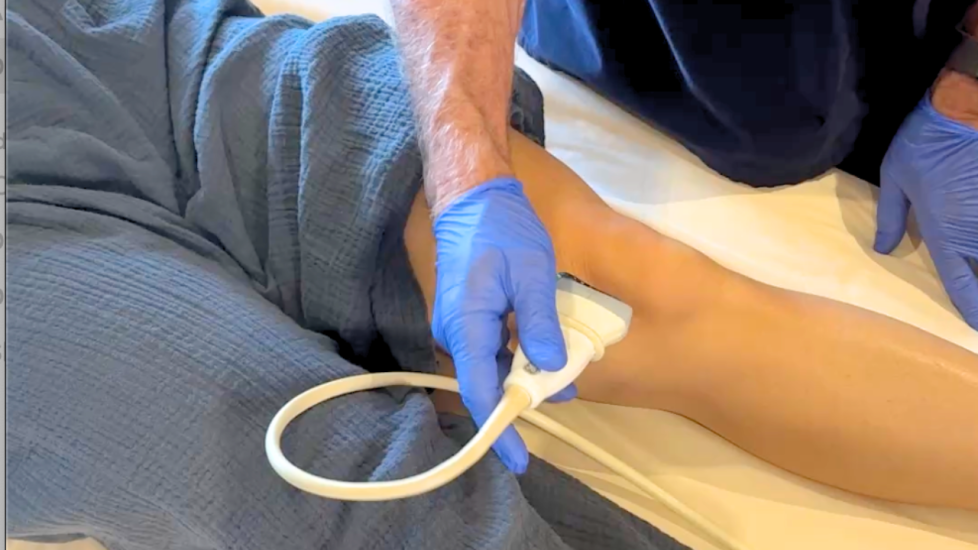
Why Ultrasound Matters in Regenerative Medicine
Seeing the Injury Changes Everything
In regenerative medicine, precision matters.
Treating pain or injury based solely on symptoms or static imaging often leaves room for guesswork. Ultrasound changes that allowing providers to see, assess, and treat tissue in real time, leading to more accurate diagnoses and targeted care.
At its core, ultrasound brings clarity to what’s actually happening beneath the surface.
Seeing the Injury in Real Time
Unlike X-rays or MRIs, ultrasound is a dynamic imaging tool. That means we’re not just looking at a still snapshot we’re observing how tissues behave as they move.
With ultrasound, providers can:
- Visualize soft tissues such as tendons, ligaments, muscles, and fascia
- Watch how tissue moves during motion
- Identify areas of irritation, degeneration, or disruption
- See where inflammation is actively present
- Determine which structures are truly involved in the pain or dysfunction
This real-time insight helps distinguish the source of the problem, rather than treating surrounding areas based on assumption.
Understanding Tissue, Not Just Symptoms
Pain doesn’t always originate where it’s felt.
Ultrasound allows clinicians to:
- Differentiate between muscle strain, tendon injury, ligament damage, or joint-related issues
- Identify scar tissue, micro-tears, or chronic degeneration
- Assess blood flow and inflammatory patterns
- Track changes over time
By understanding the tissue itself, not just reported symptoms, regenerative treatment plans become more accurate and effective.

Precision-Guided Treatment Delivery
One of the most powerful benefits of ultrasound in regenerative medicine is precision-guided treatment.
Rather than relying on anatomical estimates or “blind” injections, ultrasound allows treatments to be delivered directly to the targeted tissue.
This means:
- The treatment reaches the intended structure
- Surrounding tissues are avoided
- Accuracy and consistency improve
- Patient comfort often increases
- Outcomes are more predictable
In regenerative care, where treatments are designed to stimulate healing at a specific site accuracy matters.
Why Precision Is Critical in Regenerative Therapies
Regenerative treatments work by activating the body’s natural repair processes. For that activation to be effective, the therapy must reach the right tissue, at the right depth, in the right location.
Ultrasound guidance helps ensure:
- Growth factors or regenerative signals are delivered where they’re needed
- Degenerated or inflamed tissue is directly addressed
- Healing responses are localized and intentional
This level of precision supports better healing environments and more reliable results.
A Safer, Smarter Approach to Care
Ultrasound is:
- Radiation-free
- Non-invasive
- Repeatable as needed
- Comfortable for patients
It also allows providers to reassess tissue before, during, and after treatment — helping guide next steps and track progress over time.
Regenerative Medicine Without Guesswork
Ultrasound transforms regenerative medicine from assumption-based care into data-informed, precision-guided treatment.
By seeing the injury clearly, understanding how tissue behaves, and delivering care with accuracy, ultrasound helps ensure regenerative therapies are applied intentionally — not approximately.
The result is a smarter approach to healing, grounded in visualization, movement, and real-time feedback.